
Every few years we found ourselves running the same workshop for the same client: how to write a creative brief. It worked, until the people who had learned it moved on. So we built HARPP Brief, to make the thinking happen before the making starts.
Every few years, we found ourselves running another workshop for the same client on how to write a creative brief.
This was not because the workshops had failed. People went along, learned what a good brief looked like and, for a while, wrote better ones. Then people left. New people joined. The briefs got worse again. And eventually we would be back in a room, teaching another group how to do it.
Meanwhile, the expensive bit carried on.
Agencies were being asked to solve problems that had not quite been worked out, creative teams produced ideas against objectives that changed halfway through. Content was made, amended, discussed at length and occasionally abandoned altogether.
The client described bad briefing as one of the biggest sources of wasted effort in their marketing operation. Our first response had been the obvious one: teach people to write better briefs. But that wasn't working. Which made us start wondering whether the problem was really a lack of training.
Most people can fill in a briefing form. The headings are not especially taxing: objective, audience, message, deliverables. The difficult bit happens before anything goes in the boxes.
Is “awareness” actually the problem?
Is “everyone” really the audience?
Are there genuinely six key messages?
What does somebody need to think, feel or do differently after seeing the work?
And, perhaps hardest of all, what can we leave out?
Good strategists get very good at this. Not at filling in briefing documents, but at interrogating what goes into them. They ask irritating questions. They notice when an answer is vague. They force choices.
Ideally, someone like that would be involved every time, but they aren't. Sometimes the brief needs to be written by someone who has never written one before (and pretending otherwise does not improve the brief).
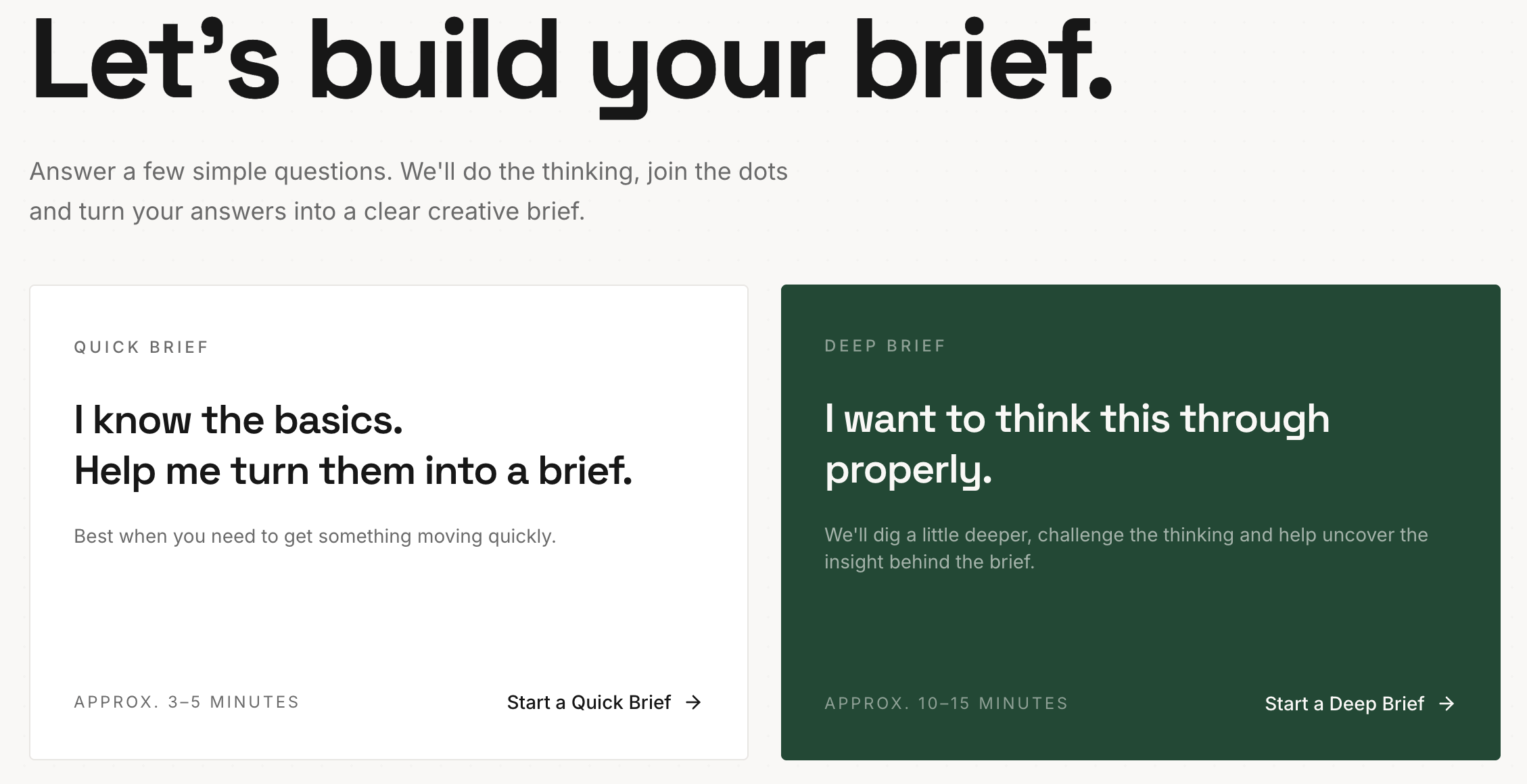
That was the thought behind HARPP Brief.
It is not an attempt to automate strategy, and it is not there to tell experienced strategists how to do their jobs. It is for the person who still needs to get to a decent brief when the strategist is not in the room.
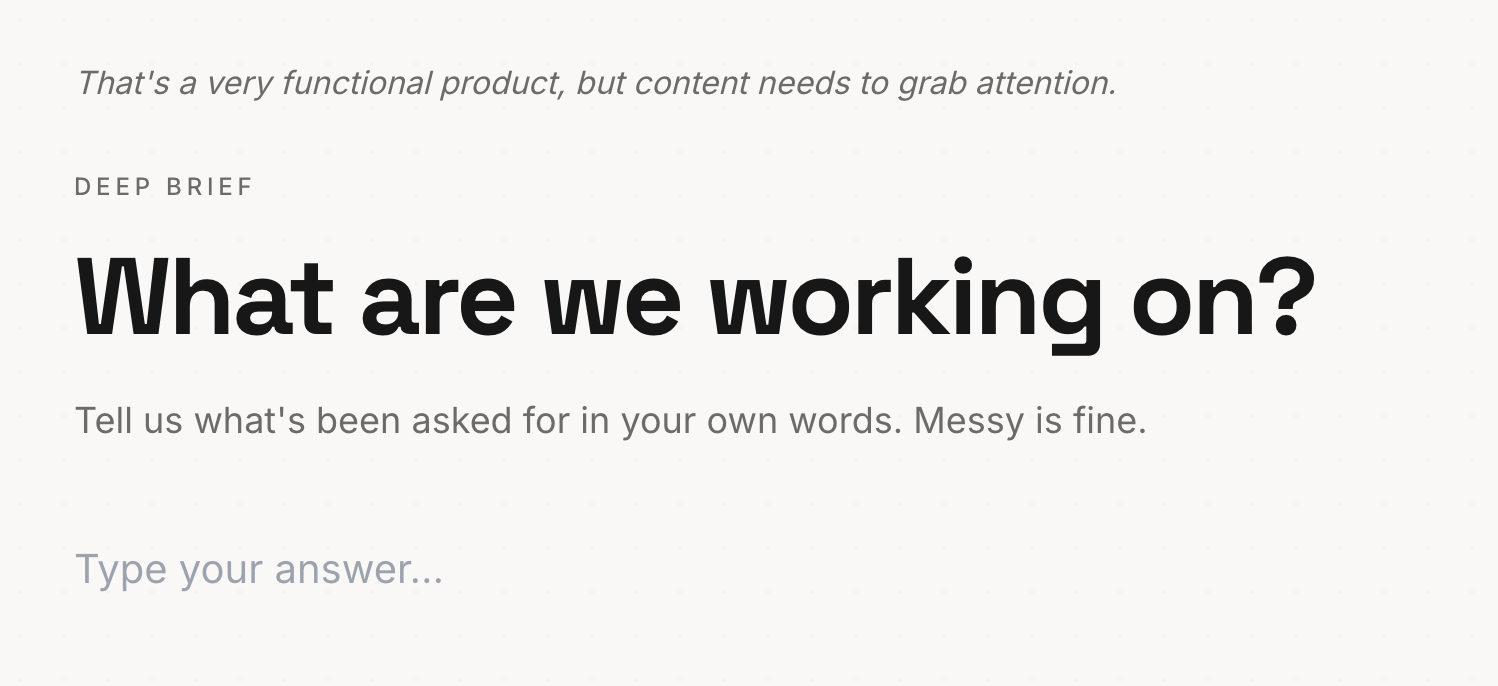
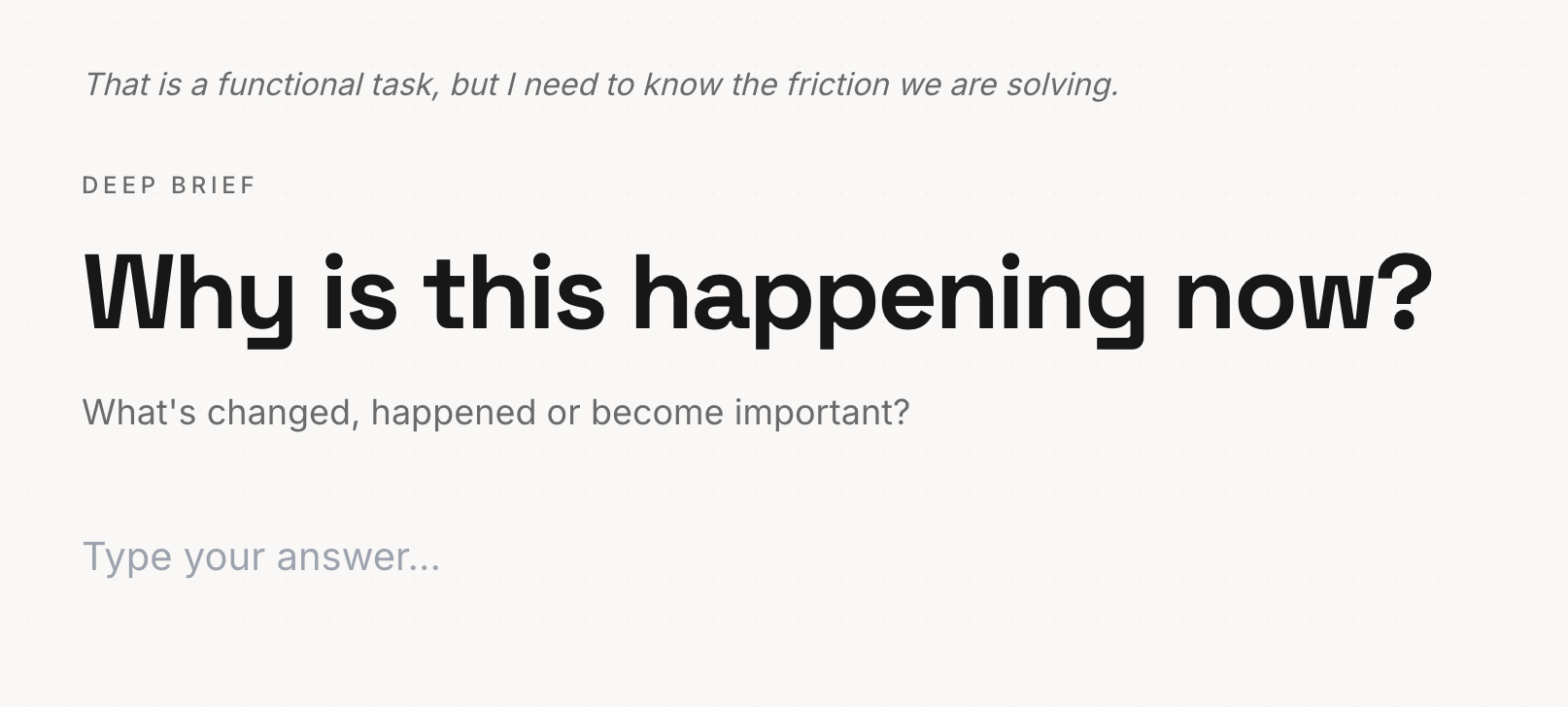
So instead of simply giving them boxes to fill in, it asks questions. And when an answer is vague, it asks another one.
Say the audience is “business leaders” and it will want to know which ones.
Say the objective is “raise awareness” and it will ask what you want people to do once they are aware.
Give it five messages and it will make you decide which one matters most.
The output is a brief. But that is not really the point. The point is to make some of the thinking happen before the making starts.
Because a beautifully executed answer to the wrong question is still the wrong answer.